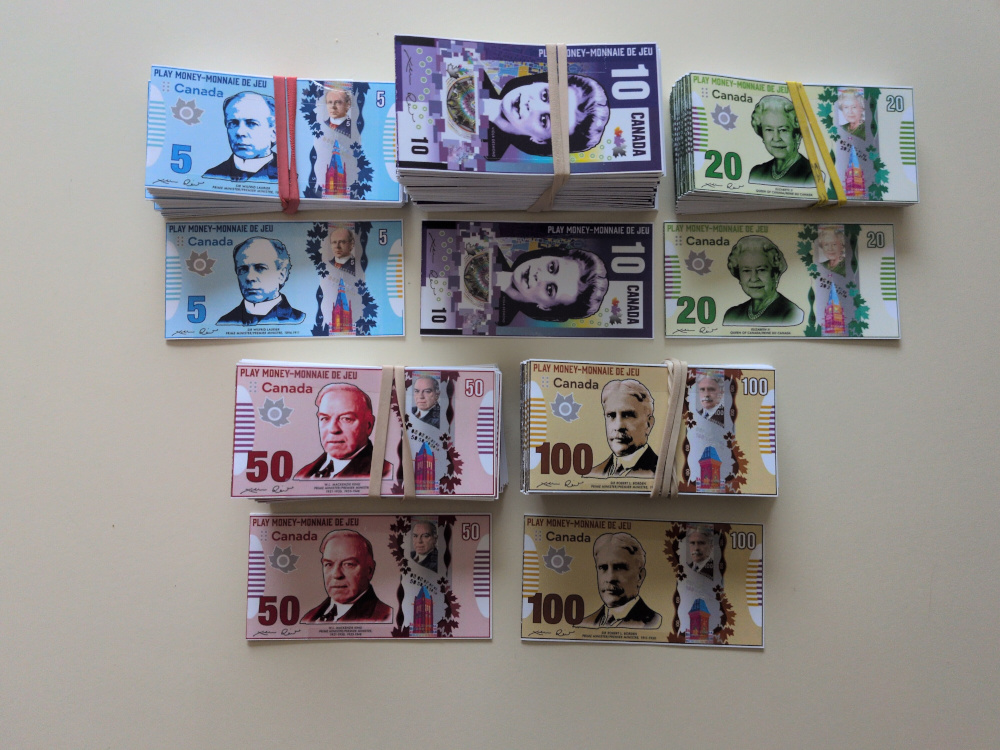
This is a new series1 I'm starting on the tools I have been crafting and buying to play pedagogical games in my Economics classes.
These games, aside from being just plain fun for the students, often aim to teach them a lesson via interactive play. Unsurprisingly, it is much easier for them to grok a particular concept this way. Moreover, many students told me these activities were the best part of the classes I teach.
The World Trade Game
I found out about The World Trade Game in The Handbook of Pluralist Economics Education2, which also contains many other fun pedagogical games. It was first developed by Action Aid, but has since been refined by John Sloman and then by Irene van Staveren, who wrote about her use of the game in the aforementioned book.
The goal of this blog entry is not to describe the game and teach you how to play it. If that interests you, either buy the book I mentioned or read about Sloman's version here.
No, our focus point here is the tools to play this game: fake cash! Fake cash can be used in many economics pedagogical games and in my opinion, is a worthwhile "investment" of your time and energy. You could indeed play with regular printed sheets of paper listing a value (I sure did!), but using Play Money (a more appropriate term, since we're not trying to defraud anyone) will up your game and create a more immersive atmosphere in your classes.
At first, I tried to buy play money. Surely, some commercial offering aiming to create realistic props for movies and TV productions existed? At least in Canada, it turns out the answer was no. The only thing I could find were shady websites and weird expensive listings on AliExpress. Not being tenured yet, I did not try to convince my employer to take a 50-50 chance on supporting criminal endeavours.
As such, the next best thing I found was printable play money designed by the Bank of Canada Museum. Their designs were quite nice and met my needs, but their PDF layout made it overly complicated to print large quantities of bills. As such, I played around with GIMP a little and came out with these files. A commercial printer shouldn't have issues printing them on glossy cardstock paper and cutting them up for you:
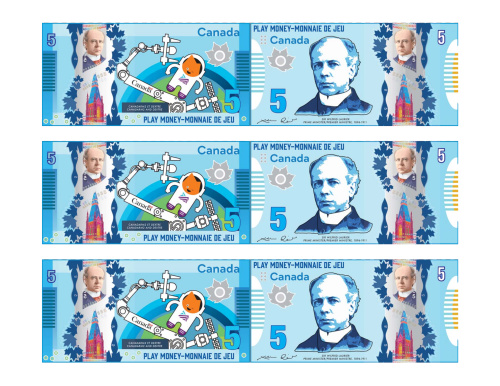
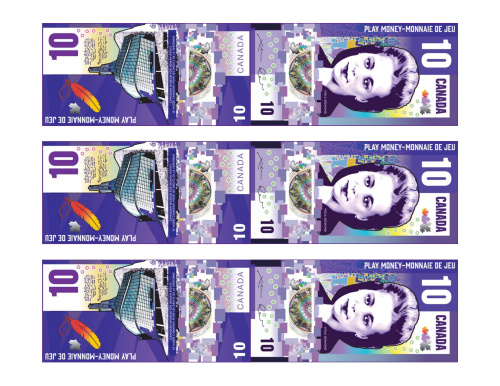
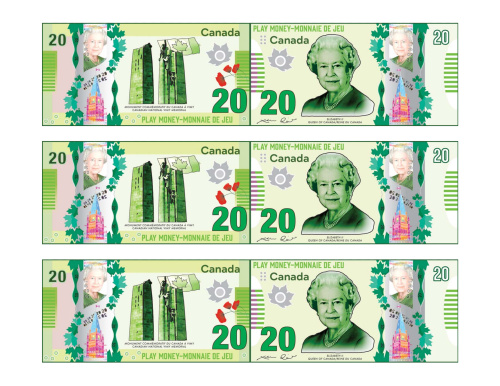
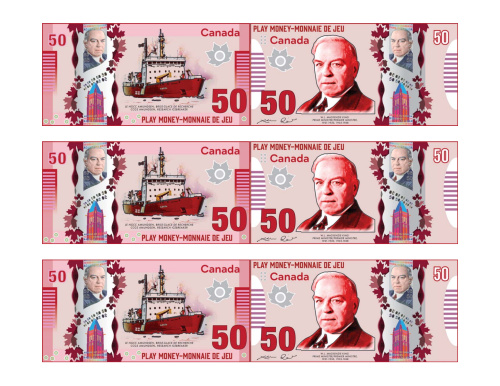
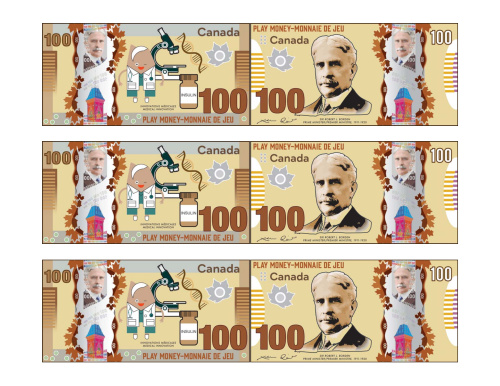
Once printed and cut, you'll unfortunately have to fold each bill by hand. To secure both halves, I ended up using a strip of transparent tape on each long edge.
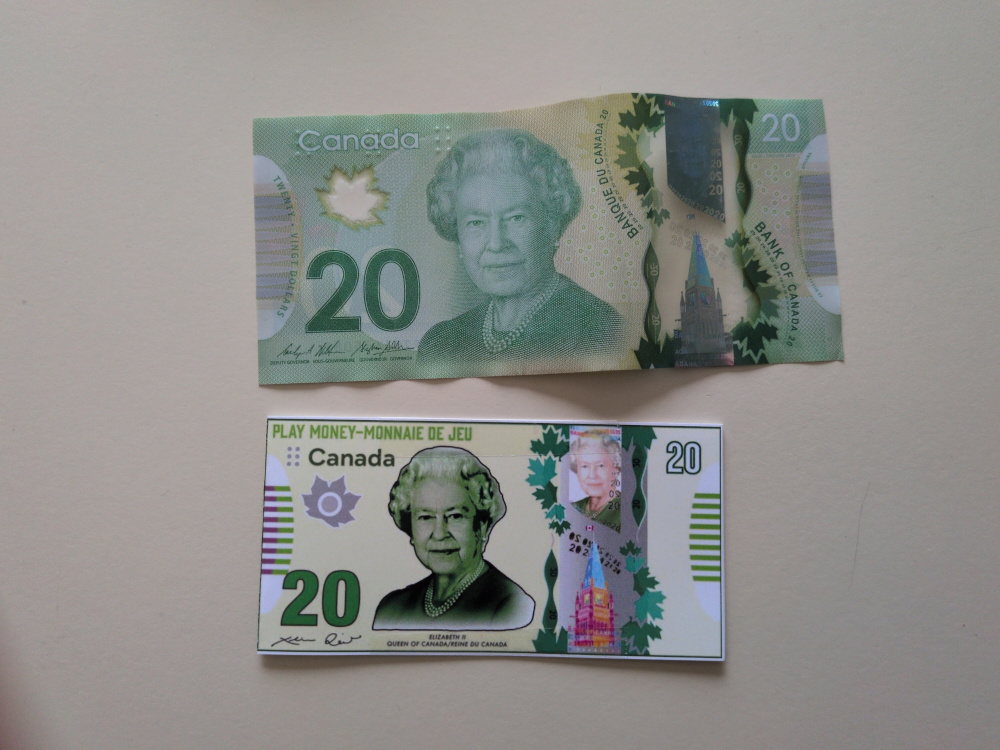
Here is the result, with a real Canadian 20$ bill as a comparison: